


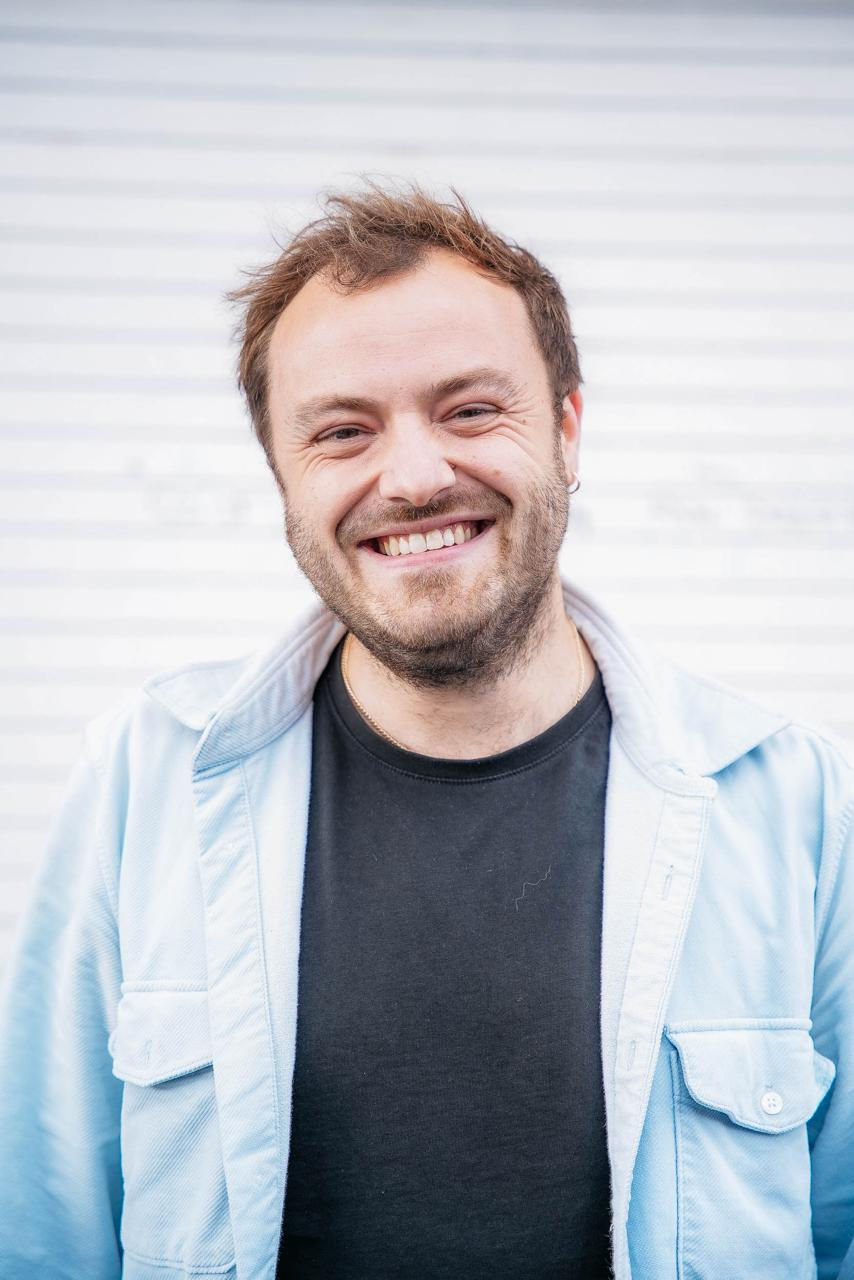
Samuel Jaramillo
- Jan 14
- 2 min read
//January-February 2026
//Artist

Samuel is a Colombian-born artist living in diaspora for the last 15 years between Australia, Germany, and the US. His work responds to the consumption of art, the lack of sacredness in contemporary culture, and the disconnect from history and its colonial legacy. Through painting, sound recording, and ritual facilitation, he cultivates spaces of co-creation that invite reflection upon systems of power while finding new ways to be in silence together. His practice is inspired by pre-colonial anthropomorphism and experimentation with organic materials such as bol, amate, cochinilla, and añil. From a material standpoint, his work is a form of map. The use of organic and local materials connects the forms with a contextuality that speaks of the here and now, anchoring compositions in a plane between earth and sky. A bridge of layers that speaks of history and the regression from gold to earth, through the realization that the precious and the divine remain human inventions made real through power and suppression. In 2025 he completed a residency at Arquetopia Puebla studying natural pigments and Baroque gilding. He is also a tea server, offering ceremonies where meditation and silence meet. He sees himself working as a vector between cultures and technology, building an art practice aligned with his worldview: a living world, not to be extracted but guarded and cultivated.
El Boga Residency
Samuel continues his investigation into silence as expiation, guilt as colonial inheritance, and the inversion of Catholic ritual. In Mompox, a town built on gold extraction and religious conversion, he studies how materials and techniques carry the weight of history. The filigree tradition mirrors his reversal of gilding: what happens when we strip gold back to earth, when we refuse the hierarchy of precious over common? Through material research with local artisans, sourcing regional clays and pigments, and creating a new body of paintings using bol as protagonist, his work maps colonial inheritance, extraction, and what remains. The project asks: what if silence is not the absence of speech but the refusal of confession? What if the land, the materials, the river already hold the truth, and our role is to listen, not to speak?


Comments